ChatGPT
Reasoning, drafting, code review at speed.
 Currently engaged Oregon Department of Education Business Intelligence Analyst · Since Dec 8, 2025
 Epsilon Labs · Independent data science practice
I’m Brian Cervantes Alvarez — a statistician who builds. Epsilon Labs is my one-person practice: statistics-first, AI-native, and in service of the community organizations and teams around me who need answers that hold up under scrutiny.

Contract work: currently unavailable — paused while I serve at ODE. Community questions are always welcome.
The discipline
It's the craft of turning recorded facts — enrollment counts, sensor readings, survey answers — into answers you can act on. Done well, it is less about algorithms and more about asking precise questions, measuring honestly, and knowing exactly how much to trust the result.
Define the question precisely, then gather data that can actually answer it. Most projects are won or lost right here, before any model exists.
Fit statistical and machine-learning models — then try hard to prove them wrong. A model you haven’t attacked is a model you can’t trust.
Translate results into a decision, ship the tooling, and watch whether reality agrees. The analysis isn’t done when the report is.
The stakes
Every organization already makes data decisions — the only question is whether the data gets examined carefully or just gestured at. Three habits separate the two:
Two programs with the same average outcome can serve completely different people. Distributions — not summaries — are what good decisions are made of.
A forecast without an error bar is an opinion. Quantified uncertainty tells you when to act, when to wait, and when to collect more data.
An analysis that reruns cleanly next quarter becomes infrastructure. One that doesn’t becomes folklore. I build the first kind.
The practice
Four practice areas, one throughline: every engagement ends with something your team can run without me in the room.
Experimental design, hypothesis testing, regression, and Bayesian inference for questions that deserve careful answers.
Classification, forecasting, and risk scoring with proper validation. Models built to hold up under audit.
Self-service decision tools your team can poke at without me in the room — defaults that surface signal first.
Pipelines that document their assumptions, version cleanly, and produce the same numbers next quarter.
AI-native
Frontier models are part of how I work every day — for code, for drafts, for analysis pairing. The craft is knowing when they're confident and when they're guessing: I write the prompts, run the evals, and validate output against ground truth before anything ships.
Reasoning, drafting, code review at speed.
Long-context analysis, careful writing, hard problems.
Multimodal exploration, large doc ingestion, fast iteration.
Local models · the workhorse behind everything that can't touch a cloud API
Open-weight models running on my own hardware — prompts, RAG experiments, and eval harnesses iterate offline, with zero per-token cost.
Some data can never leave the building — student records, health data, anything under agreement. Self-hosted inference makes AI usable there at all.
Pinned local models don’t drift under your test suite overnight. Evals run against the same weights every time, so regressions mean something.
Automation with receipts: anything a model touches — hosted or local — gets the same validation discipline as anything I write by hand.
Proof
Dashboards, models, and analyses built end-to-end — each one links to the full write-up with methods and code.

Dashboard
An interactive dashboard for exploring incident patterns — filters, dynamic views, defaults that surface signal first.
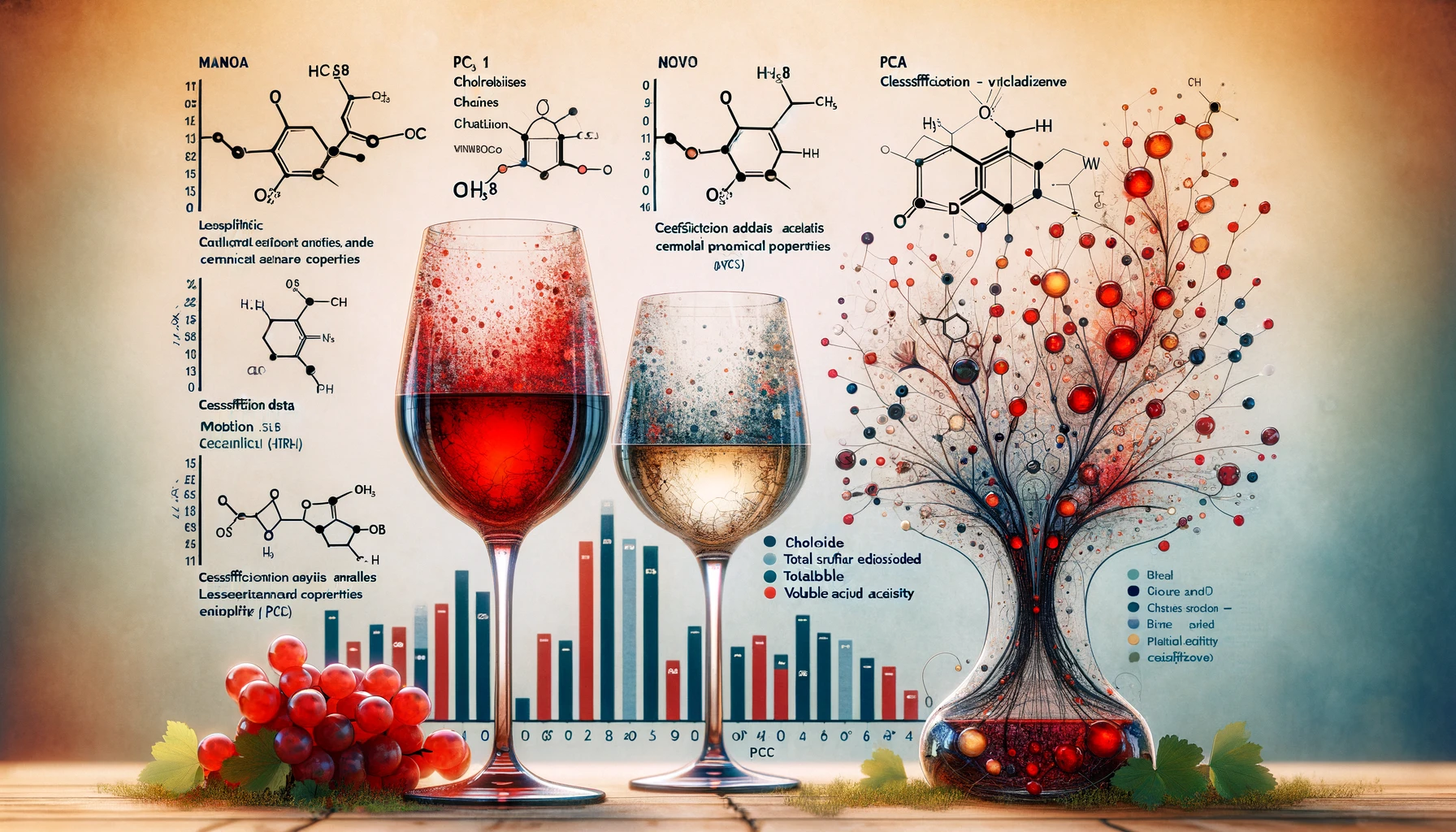
Statistical modeling
PCA and supervised models with diagnostics to separate signal from noise across correlated chemical features.

Geospatial dashboard
A spatial review explorer with map-linked filters, density layers, and per-business summaries.
On stage
Live teaching is where the practice sharpens. Every deck below is embedded on its page — open one and present it fullscreen.
Brian Cervantes Alvarez
M.S. Statistics, Oregon State · M.S. Data Science, Willamette
Quarto Jan 2025 · Workshop
A practical talk on the lowest-friction way to publish your work as a data professional.
Statistics Dec 2024 · Graduate seminar
Logistic regression and ANOVA on 32,581 loan applications — what predicts approval, and where the surprises sit.
Statistics Dec 2024 · Graduate seminar
Why missingness matters, the three flavors (MCAR, MAR, MNAR), and a practical Multiple Imputation walkthrough.
Statistics Lab Aug 2024 · Teaching workshop
Why webR belongs in the modern R classroom, demonstrated live.
Open shelves
Free, canonical, and community-maintained — the same shelves I point students and clients to. No affiliate links, no gates.
My own shelf lives on the blog — teaching labs, visualization walkthroughs, and applied write-ups.
An honest invitation
Epsilon Labs looks like a modern studio, but it's one statistician serving his community. Right now my full attention belongs to the Oregon Department of Education, so contract engagements are paused — but the door isn't closed.
Community organizations, educators, students: send the question and the data you have. I'll reply within two business days with next steps — or point you to someone who can take it on if I can't.
Backed by graduate training in Statistics (M.S., Oregon State) and Data Science (M.S., Willamette) — the foundations live underneath every model and every report.